
A good script formula is exactly the thing that tempts a lane to open with video. It shouldn't. Video is the expansion layer, and everything in this chapter assumes the message it carries has already won somewhere cheaper.
Key takeaways
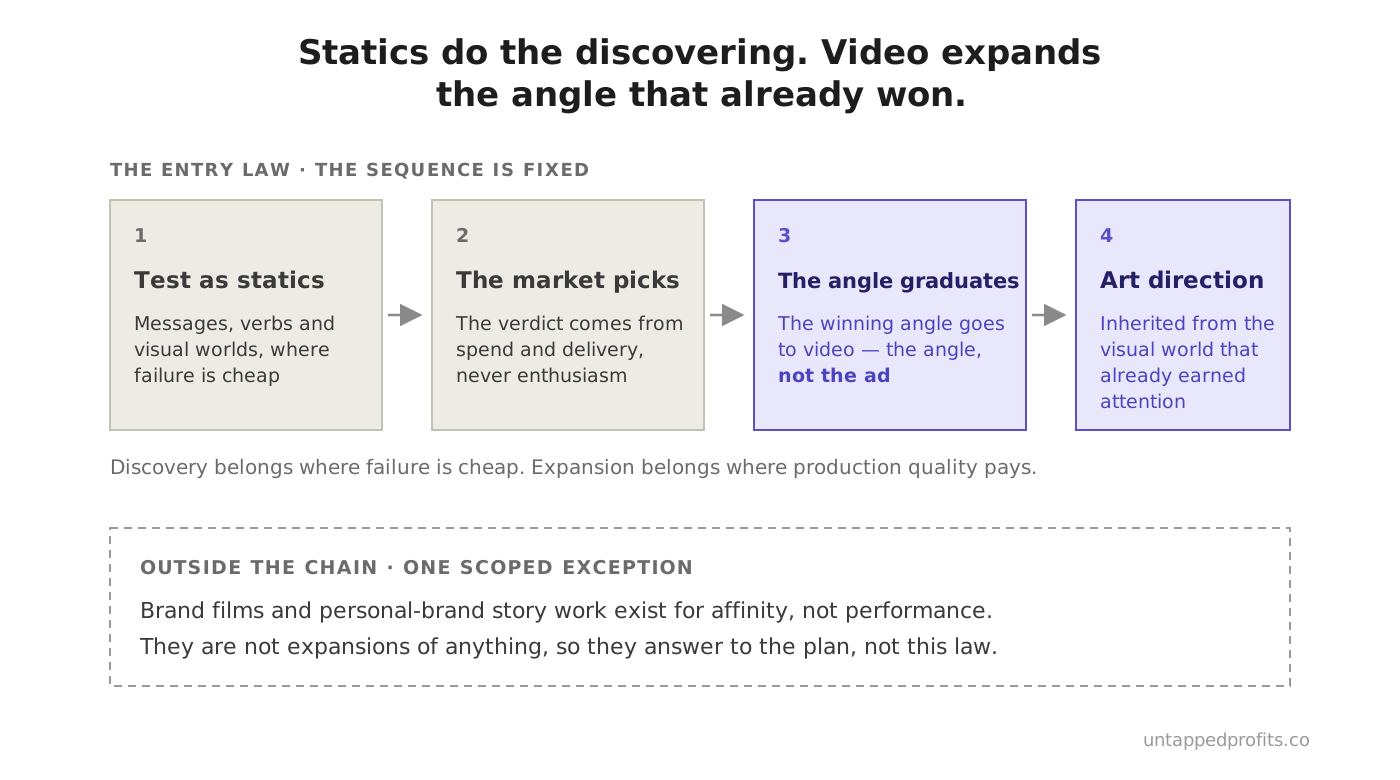
- The named framework is The Entry Law: video expands proven winners and never opens a lane. Messages, verbs and visual worlds are discovered in statics, and the winning angle graduates to video, art-directed by the winning visual world.
- Branding carries the load at glancing view times: across more than 20,000 tracked views, well-branded video assets were 2.5 times more effective than weak ones even with very limited view time.1
- Duration selects the engine. Short-form runs on a six-stage ladder built for infinite scroll, while two-to-three-minute work runs on an eight-beat cinematic structure because character needs room. Both are adopted method, not proprietary invention.
- The protagonist is built from the Intelligence Pack, never invented: the misbelief is a belief to break and the fear is the core wound, both named fields in the pack.
- Shot counts and voiceover word counts are ceilings, measured and not felt. Over the word ceiling means the pace is wrong, not that the read should be faster.
Why doesn't a lane open with video?
Because video is the most expensive way to discover you had the wrong message. A static tests an angle for the cost of a generation. A video tests the same angle for the cost of a shoot, an edit and a week. Discovery belongs where failure is cheap, and expansion belongs where production quality pays.
So the sequencing is fixed. Messages, verbs and visual worlds test as statics, the market picks the winners, and the winning angle then graduates to video, art-directed by the visual world that already earned attention. The winner that graduates is the angle rather than the ad, so video re-expresses what worked instead of filming a static out loud.
The graduation carries the brand codes with it, and the stakes of that are measured. Research by Dr Karen Nelson-Field with VCCP Media and Amplified, tracking over 20,000 views of 72 digital video ads, found that even in ads with very limited view time, well-branded assets were 2.5 times more effective at driving outcomes than weak ones.1 At feed speed, the branding is doing much of the film's work before the story has started.
There is one exception, and it is scoped narrowly. Brand films and personal-brand story work exist for affinity and not performance. They are not expansions of anything, so they do not answer to this law. They answer to the plan.
Nelson-Field's framing explains why the discipline is so easy to abandon: "How a marketer thinks advertising works directly shapes what is created, which media is chosen, who is targeted and what is measured."2 A team that believes production value causes performance will open with video every time, and will read the resulting cost as the price of quality rather than as the price of guessing.
How is the script built?
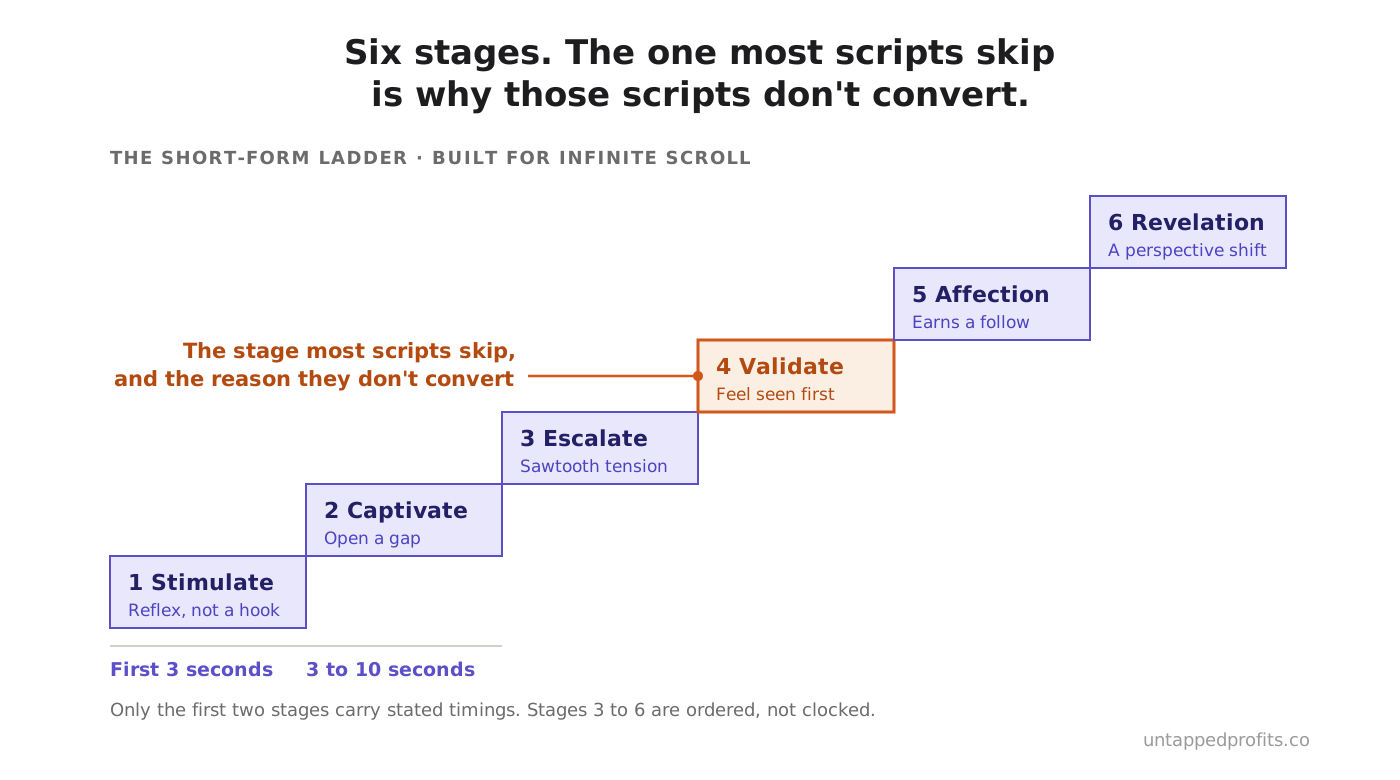
Duration selects the engine, and mode selects how deep the character work goes. Short-form runs on a six-stage ladder built for infinite scroll. Longer work runs on an eight-beat cinematic structure, because character development needs room to breathe. They combine rather than compete: the ladder supplies pacing, the eight-beat supplies character.
The six stages of the short-form ladder, in order:
- Stimulate, in the first three seconds. A visceral reflex trigger, not a narrative hook. Cold open, in the middle of the action, no logo and no setup. The reflex decays fast: it buys the next stage its opening, and nothing more.
- Captivate, from three to ten seconds. Move the viewer from reflex to interest by opening an information gap: an open loop, an explicit promise, an exclusion, or a stated conflict with what the viewer already believes.
- Escalate. Sawtooth tension: raise, release, raise higher. A flat middle is where the scroll resumes.
- Validate. The viewer must feel seen before any ask. This is the stage most scripts skip, and it is the reason those scripts do not convert.
- Affection. The beat that earns a follow rather than a view.
- Revelation. Resolution as insight instead of information. A perspective shift, not a summary.
Underneath both engines sits the protagonist, and this is where video is most likely to drift into fiction. Every protagonist carries a desire, a fear, a misbelief, a backstory, an epiphany and an opinion, and every one of them is written out of the Intelligence Pack instead of imagined. Two of them map to named fields in the pack, and the rest are written from the same material.
| Protagonist trait | Where it comes from |
|---|---|
| Fear | The core wound, a named field in the pack |
| Misbelief | A belief to break, a named field in the pack |
| Epiphany | The moment that belief gives way, so it is derived from the misbelief rather than recorded separately |
| Desire, backstory, opinion | Written from the pack's material, with no single field behind them: the pack records the wound, the beliefs and the Ejection Triggers, not a biography |
A protagonist whose psychology does not trace back to the Intelligence Pack is fiction wearing the client's audience as a costume. The pack itself is built in Customer Intelligence, and a trait that cannot be argued back to it is the signal that the script has started inventing an audience.
What are the ceilings?
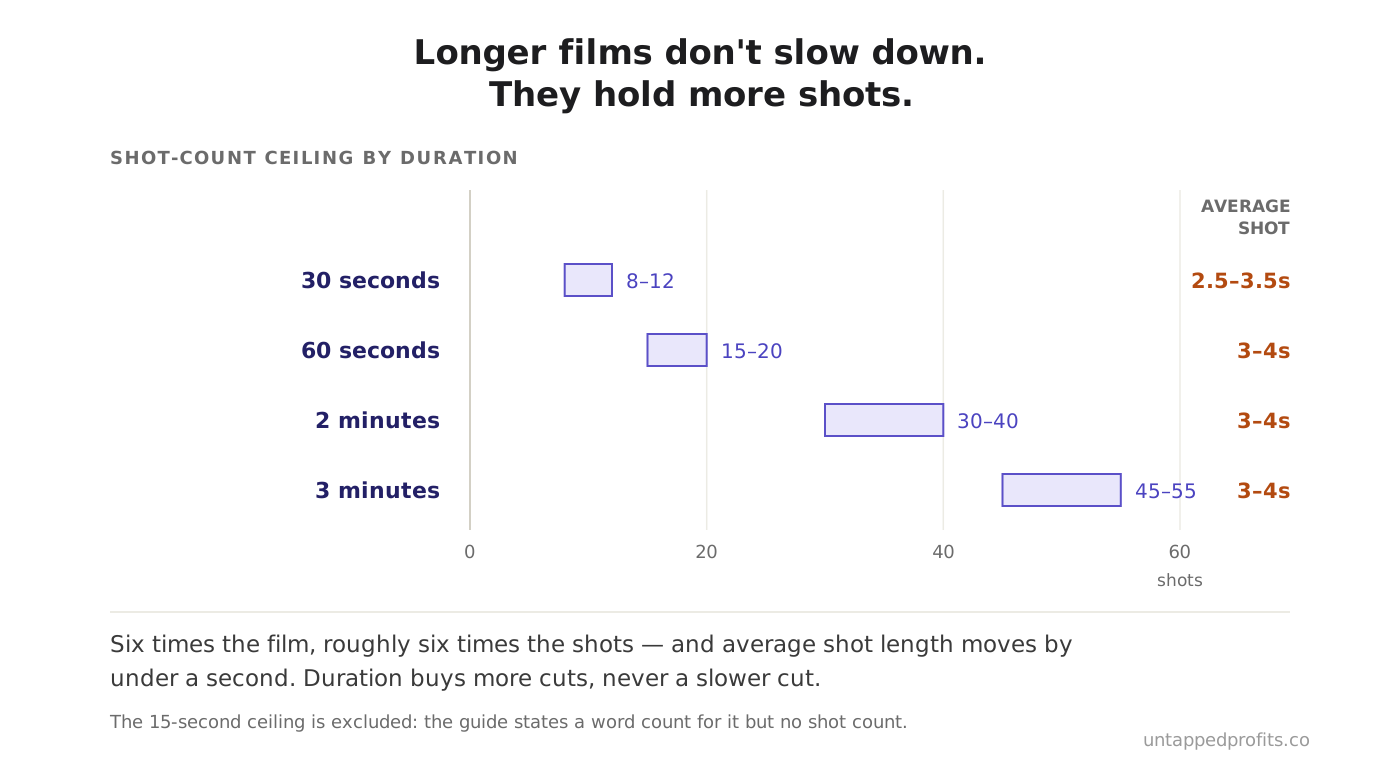
Shot counts and word counts, measured before the script is called finished. These are not style preferences and they are not negotiated per project. A script over its word ceiling has a pacing problem, and the fix is cutting the script rather than instructing the read to go faster, which is how a film ends up sounding hurried instead of being shorter.
| Duration | Shots | Average shot | Voiceover words |
|---|---|---|---|
| 15 seconds | n/a | n/a | ~40, fast |
| 30 seconds | 8–12 | 2.5–3.5s | 75–85 |
| 60 seconds | 15–20 | 3–4s | 150–160 |
| 2 minutes | 30–40 | 3–4s | 300–320 |
| 3 minutes | 45–55 | 3–4s | 450–480 |
Alongside the ceilings sit the scripting rules that decide whether the thing is watchable at all. Open on action, never on the presenter: scene one is an action scene with the hook as voiceover, and a presenter enters at scene two at the earliest. Dialogue before voiceover. Emotional state must be visible rather than narrated. Sound-off legibility is the floor everywhere, so key moments carry text overlays regardless of platform, because sound-on behaviour differs by placement and the floor never moves.
In practice
Brief every shot for a director rather than for a tool — Content Repurposing carries the full briefing law and the model-lock argument behind it. Deliverables here are scripts, shot lists and voiceover; prompt syntax, avatar specification and voice design all happen downstream, so the brief outlives whichever engine renders it.
Watch for
A trailer register being treated as licence for stacked punchlines. The voiceover answers to the same voice profile and the same prose law as everything else the business publishes. Cinematic pacing is a permission to be dramatic, not a permission to write like a machine imitating drama.
Where does the call to action sit?
Scoped by what the asset is for, so the line between teaching and selling never blurs. Paid assets carry a call to action. Repurposed educational content carries no offer at all, because authority is demonstrated by the teaching. Brand and personal-brand films close on the next chapter and not a purchase.
| Asset type | What the call is | What it answers to |
|---|---|---|
| Paid asset | A call to action | Platform conventions, with button, headline and destination in agreement |
| Repurposed educational | No offer at all: follow, save, share, or ending on the piece's own question | Authority is demonstrated by the teaching, so an offer undercuts it |
| Brand and personal-brand film | The next chapter, not a purchase | These exist for affinity rather than performance |
In every case the call is written as a transition out of the story instead of bolted on after it. A film that resolves in insight and then stops to read a slogan has undone its own last stage.
How is a script checked?
Against the ceilings, then against the law, then by somebody who did not write it. Short-form is asked whether the first three seconds interrupt instead of introducing, whether the gap is explicit by ten seconds, whether tension escalates, whether the viewer is validated before the ask, and whether it works sound-off. Long-form is asked whether the misbelief traces to the pack and whether the ending pays off the opening image.
Both question sets are written down rather than remembered, because a checklist held in someone's head is a checklist that shortens on a busy day.
Both then run the standing checks: sources anchored, the prose swept for machine patterns, brand codes carried, the call scoped correctly. The last one is structural and not editorial: the writer never reviews its own script. That is the same cold-read discipline set out in The Review Seams, applied to a medium where the cost of shipping a weak script is measured in production days.
Frequently asked questions
What counts as a proven winner worth graduating to video?
An angle that has spent, held its target on the qualified measure over enough delivery to be a verdict, and survived long enough not to be a spike. The graduation decision belongs to the winner-expansion rules and not to enthusiasm about a particular idea, and what graduates is the angle across the awareness spectrum rather than the single ad.
Isn't this just an excuse to avoid making video?
The opposite. It is how a business ends up making video worth the money, because every film starts from a message the market has already voted for. Lanes that open with video usually make one expensive thing, cannot tell whether the message or the execution failed, and conclude that video does not work for them.
Where do the two engines come from?
They are adopted and not invented, and the guide says so. The ladder and the eight-beat structure are absorbed method, combined here with the repurposing system's video architecture. What is proprietary is the surrounding law: the entry rule, the Cartridge-traced protagonist, the ceilings enforced as gates, and the cold review.
Does the presenter need to be on camera?
Not at the open, and not dominating anywhere. Scene one is action with the hook as voiceover, and a presenter enters at scene two at the earliest and alternates rather than carrying the whole film. Opening on a talking head spends the reflex window on a setup nobody asked for.
How is this different from the static ad process?
The creative law is identical, because the law is medium-agnostic. Hooks pass the same tests, claims come from the same Proof Bank, brand codes carry, and the gates run. What changes is the discovery-versus-expansion role and the production grammar: pacing, shot counts and the sound-off floor. That is what this chapter adds.
The bottom line
Video is not the top of the creative ladder. It is the amplifier at the end of it. Prove the angle where proving it is cheap, graduate the winner rather than the ad, build the protagonist out of the Intelligence Pack instead of imagination, hold the shot and word ceilings as gates and not guidelines, and let someone else read the script before it goes into production. Do that and video earns its cost. Open a lane with it and the most expensive asset in the plan becomes the least informed one.
Where this connects
Video inherits the medium-agnostic law set out in Creative Production: hooks pass The Hook Law, everything runs The Five Gates, brand codes come from The Brand Codes Register, and the cold read is The Review Seams. The statics that do the discovering are Static Ads. Claims come from The Proof Bank, protagonists from Customer Intelligence, and what a winner triggers returns through The Return Arrow. The archive arguments closest to this chapter are The Brand That Learns Fastest Wins and You Stopped Them, Then You Lost Them. Back to the One Brain Method hub.
Part 5 · Creative Production · Chapter 21 of the One Brain Guide
Previous: Static Ads ·
Next: Generated Imagery ·
All chapters
Sources
- VCCP Media, Dr Karen Nelson-Field and Amplified, 16 May 2025: research tracking over 20,000 views of 72 digital video ads across eight brands found that even in ads with very limited view time, well-branded assets were "2.5x more effective at driving outcomes than weak ones." Amplified. VCCP Media is an agency and Amplified sells attention measurement, so both have a commercial interest in the finding.
- Dr Karen Nelson-Field, The Attention Economy and How Media Works, quoted by Amplified: "How a marketer thinks advertising works directly shapes what is created, which media is chosen, who is targeted and what is measured."
Every statistic and quotation on this page has been checked against its primary source. Last verified 26 August 2026.
Free guide
Take the method with you. The complete One Brain Method as one PDF: every chapter, the diagrams, and every named framework, ready to hand to whoever runs your marketing. Enter your email and it's yours.
Want video that expands a winner instead of guessing expensively?
Book a 30-minute call → See what it takes to have this installed