
Customer Intelligence is the discipline of knowing who the marketing is talking to, deeply enough that every asset can be tested against what those buyers think, want, and refuse to tolerate. Its working unit is the Intelligence Pack, built per avatar.
Key takeaways
- Among B2B marketers who rate themselves top performers, 82% credit understanding their audience above every other factor, per CMI's 2025 research.1 The factor they put above everything money buys.
- The unit is the avatar, not the demographic: a buyer in a situation, because situations produce behaviour and demographics only correlate with it.
- Each Intelligence Pack holds three things: the core wound, beliefs to break or match, and Ejection Triggers.
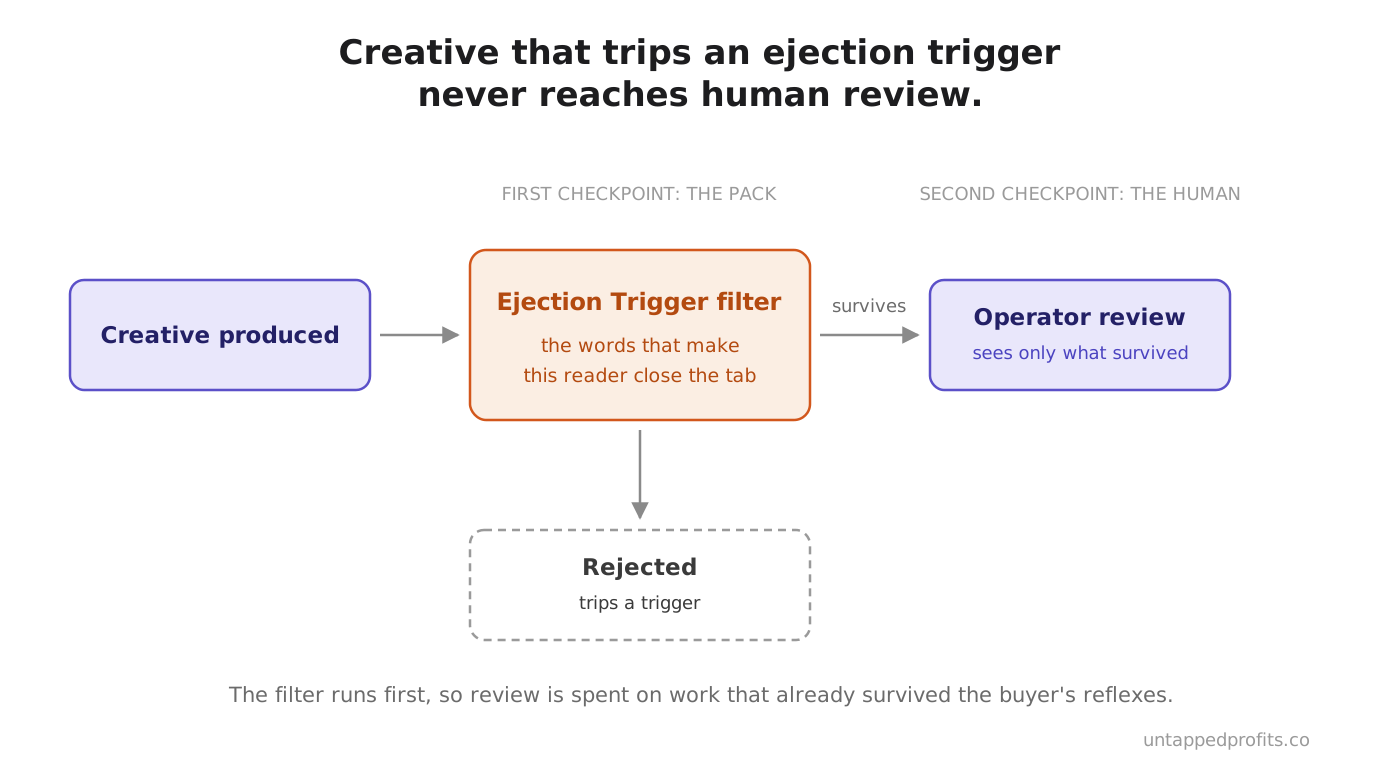
- The triggers are a hard filter. Creative is checked against them before the Operator ever sees it, so what reaches review has already survived the buyer's reflexes.
- The test of any audience document is veto power. A persona has never killed an ad. A pack does it routinely.
Why does marketing built on demographics miss?
Because most audience research produces a poster. Sarah, 34 to 45, household income $120K, values authenticity, loves coffee. Nobody has ever sold anything to that poster. It describes a category of person while saying nothing about what is going on in the buyer's head at the moment an ad interrupts them.
Demographic targeting decides who sees the message. It cannot decide what the message should say, and the gap between those two jobs is where budgets die. What creative actually needs is the worry, the conclusion the buyer already reached, and the phrasing that makes them flinch.
The ones succeeding point at the same place. In CMI's 2025 B2B research, the marketers who rated their content marketing extremely or very successful credited understanding their audience more than any other factor, at 82%.1 Not budget, not tooling, not volume. Knowing the buyer.
David Ogilvy named it in Confessions of an Advertising Man: "The consumer isn't a moron; she is your wife. You insult her intelligence if you assume that a mere slogan and a few vapid adjectives will persuade her to buy anything."2 Intelligence work is what respect for the buyer looks like in practice, which means knowing them too well to bore them, insult them, or guess.
How does Customer Intelligence work?
Through one artefact per avatar, built to govern rather than describe. The named framework is the Intelligence Pack, and it holds the core wound, the beliefs to break or match, and the Ejection Triggers. Every avatar the campaign plan targets gets one, and no pack means no campaign against that segment.
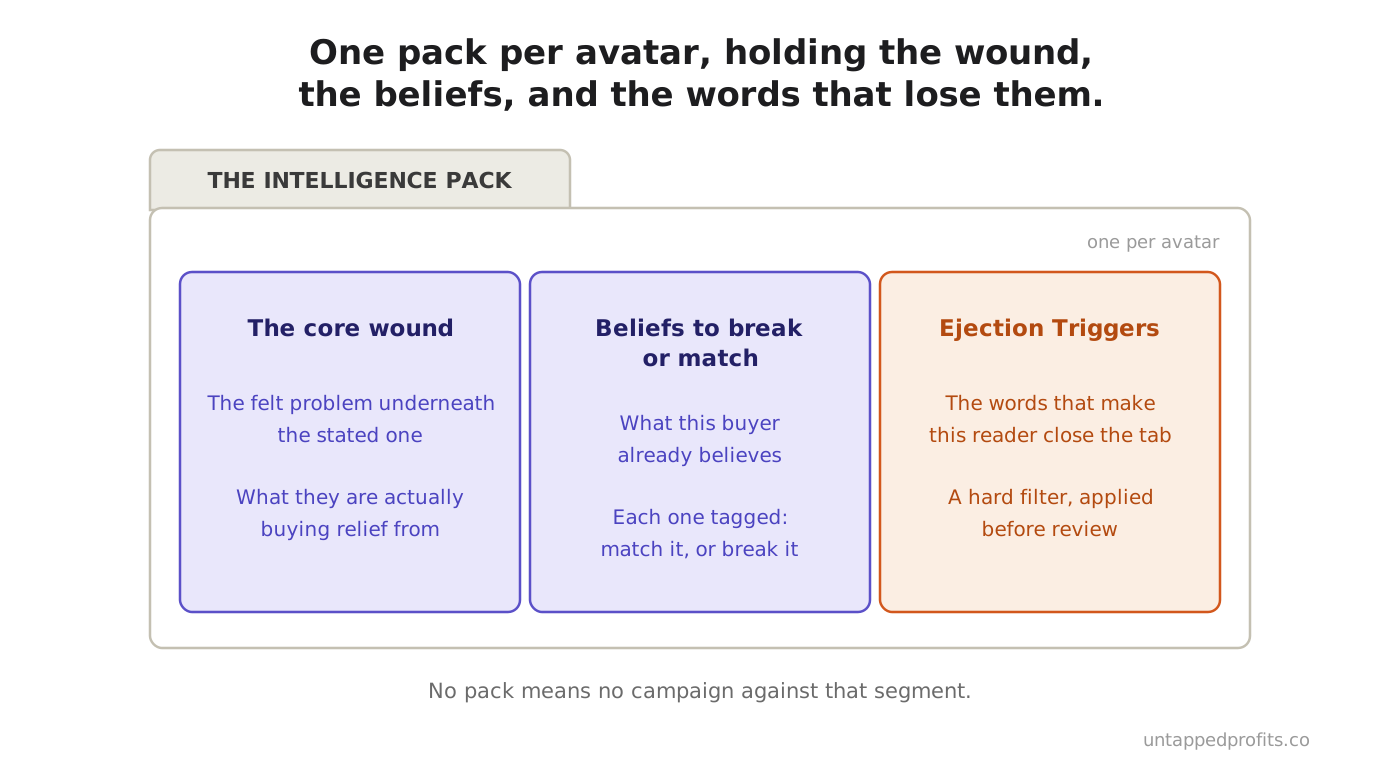
- The unit is the avatar, not the demographic. An avatar is a buyer in a situation: the owner who has been burned by two agencies and now reads every promise as a trap. That is a different thing from a row of census attributes, because situations produce behaviour and demographics only correlate with it.
- The core wound. The felt problem underneath the stated one. The stated problem gets them searching, and the core wound is what they are actually buying relief from. Creative aimed at the stated problem competes with everyone, and creative that names the wound reads like being understood.
- Beliefs to break or match. What this buyer already believes that the marketing must either ride or confront, because a message that ignores an existing belief lands as noise. Each belief is written down and tagged: match it, or break it, and never bump into it by accident.
- Ejection Triggers. The words and framings that make this reader close the tab, from the hype phrase they have heard from every vendor to the claim shape that smells like a trick. Catalogued per avatar and used as a hard filter, so creative is checked against the triggers before the Operator ever sees it.
- The pack is a living asset. Every Analyse pass returns what actually happened, meaning which wound-framings pulled, which beliefs turned out load-bearing, and which triggers fired. The pack sharpens each time, which is the Return phase working as designed.
| Persona theatre | The Intelligence Pack | |
|---|---|---|
| What it records | Demographics and lifestyle colour | Core wound, beliefs to break or match, Ejection Triggers |
| What it's for | Decorating the strategy deck | Filtering every asset before review |
| How it's tested | It isn't | Every loop, as results feed back and sharpen it |
| What it can veto | Nothing | Any creative that trips a trigger or ignores a belief |
| Shelf life | Until the next rebrand | Continuously current, maintained by the Return |
In practice
The Ejection Triggers are the fastest part of a pack to build and the most immediately useful. Read a hundred reviews, support tickets and sales-call notes for the phrases that make this buyer bristle, and write them down verbatim. Most creative dies on those words, and most teams have never listed them.
How do you know the packs are working?
Whether the packs exist, whether they govern, and whether they compound. Targeted segments with a complete pack tell you if the plan is aimed or hopeful. Creative filtered against triggers before review tells you if the packs govern or decorate. And pack updates per Analyse pass tell you whether the intelligence is growing or just sitting there being consulted.
| Measure | What it tells you | Target |
|---|---|---|
| Targeted segments with a complete Intelligence Pack | Whether the plan is aimed or hopeful | All of them, because no pack means no campaign |
| Creative filtered against Ejection Triggers before review | Whether the packs govern or decorate | Every asset, before the Operator sees it |
| Pack updates per Analyse pass | Whether the intelligence compounds | Every loop touches every active pack |
| Messages aimed at a named belief or wound | Whether creative argues or decorates | Every message can point to the line in the pack it's built on |
Watch for
The pack that agrees with the founder about everything. Intelligence assembled to confirm what the business already believes about its buyers will pass every internal review and fail in the feed. If a year of campaigns has never contradicted a line in a pack, the pack is being written from the inside rather than from the market.
What does skipping it cost?
Creative that talks to nobody in particular, which the market experiences as talking to nobody at all. Offers pitched at beliefs the buyer doesn't hold, so the argument wins in the meeting and loses in the feed. Ejection Triggers tripped in the first line by copywriters who had no list to check against.
Then the compounding version of the loss. Without packs to receive what campaigns learn, every insight about your buyers evaporates on contact. The most expensive research programme in the building is the ad account, and if nobody writes down what it discovers, the testing produces variations instead of knowledge — the creative-level version of You Haven't Tested 20 Ads.
Frequently asked questions
What if we already know our customers?
The founder usually does, in a form that is unwritten, untestable and unavailable to anyone else, including the system generating the creative. The pack makes that knowledge operational: written down, it becomes a filter a machine can apply at volume and a new campaign can inherit on day one.
Isn't this just personas with new names?
Personas describe and packs govern, and the test between them is veto power. A persona has never killed an ad. A pack kills them routinely, because any asset that trips a trigger or argues past a recorded belief doesn't reach review. An audience document that can't reject work is decoration.
Where does the intelligence come from?
Research to start with, meaning what buyers say, ask, review and complain about, in their own words. Most businesses are sitting on more of this than they realise — Your Customers Already Told You Why They Buy shows where it hides. Results forever after: every loop's outcomes feed the packs through the Return, so the intelligence keeps running past the point a project would have ended. After a year it knows things no questionnaire could have found.
How many avatars should we have?
As many as the campaign plan targets, and no more. Each pack is a maintained asset with a cost, so a business carrying nine avatars usually has three real ones and six that were interesting during a workshop. If two avatars share a wound, the same beliefs and the same triggers, they are one avatar wearing two job titles.
Does this work in B2B, where the buyer is a committee?
Better, because committees are where unspoken beliefs do the most damage. Each role in the buying group gets its own pack, since the wound of the person who will be blamed if it fails is not the wound of the person signing the invoice. What looks like one buyer is usually three, arguing with each other in a meeting you'll never attend.
The bottom line
Demographics decide who sees the message and can't tell you what to say, which is why so much well-targeted marketing lands flat. The Intelligence Pack fixes that by writing down the wound, the beliefs and the trigger words for every avatar the plan targets, then using them as a filter creative must survive before a human reviews it. Get that right and every campaign argues with a real person instead of a poster.
Where this connects
The packs live in The Memory as its customer-intelligence holding, and The Campaign Plan draws its segments from them. What the brand may claim to those buyers is the next chapter's territory in The Proof Bank, and how the packs police creative in practice runs through Creative Production, where hooks face the triggers before they face the Operator. The sharpening cycle is The Return Arrow. For what fragmented vendors do to a customer picture, including two agencies buying the same audience without either knowing it, see The End of the Marketing Agency Model. Back to the One Brain Method hub.
Part 3 · Plan · Chapter 7 of the One Brain Guide
Previous: The Campaign Plan ·
Next: The Proof Bank ·
All chapters
Sources
- Content Marketing Institute, B2B Content Marketing: 2025 Benchmarks, Budgets and Trends, fielded 25 June to 16 August 2024. Among the 22% of respondents who rated their content marketing extremely or very successful, 82% attributed that success to understanding their audience, the highest-ranked factor. Success is self-rated, and CMI is a content-marketing body reporting on content marketing.
- David Ogilvy, Confessions of an Advertising Man (1963), page 96 in the Ballantine edition. Source punctuation preserved.
Every statistic and quotation on this page has been checked against its primary source. Last verified 24 August 2026.
Free guide
Take the method with you. The complete One Brain Method as one PDF: every chapter, the diagrams, and every named framework, ready to hand to whoever runs your marketing. Enter your email and it's yours.
Want marketing that knows your buyers this well?
Book a 30-minute call → See what it takes to have this installed