
Method-Actor Research maps the world a buyer lives in, not the things they want. It is the difference between knowing what someone is trying to solve and knowing how they talk about it at eleven at night.
Key takeaways
- Five maps: the content ecosystem, the trusted voices, the rabbit holes, the tribal splits, and how they talk when no vendor is listening.
- Stated attitudes and actual behaviour run in opposite directions: Australians rate online influencers the world's highest misinformation concern at 57 percent,2 and 43 percent get news from creators and influencers anyway.1
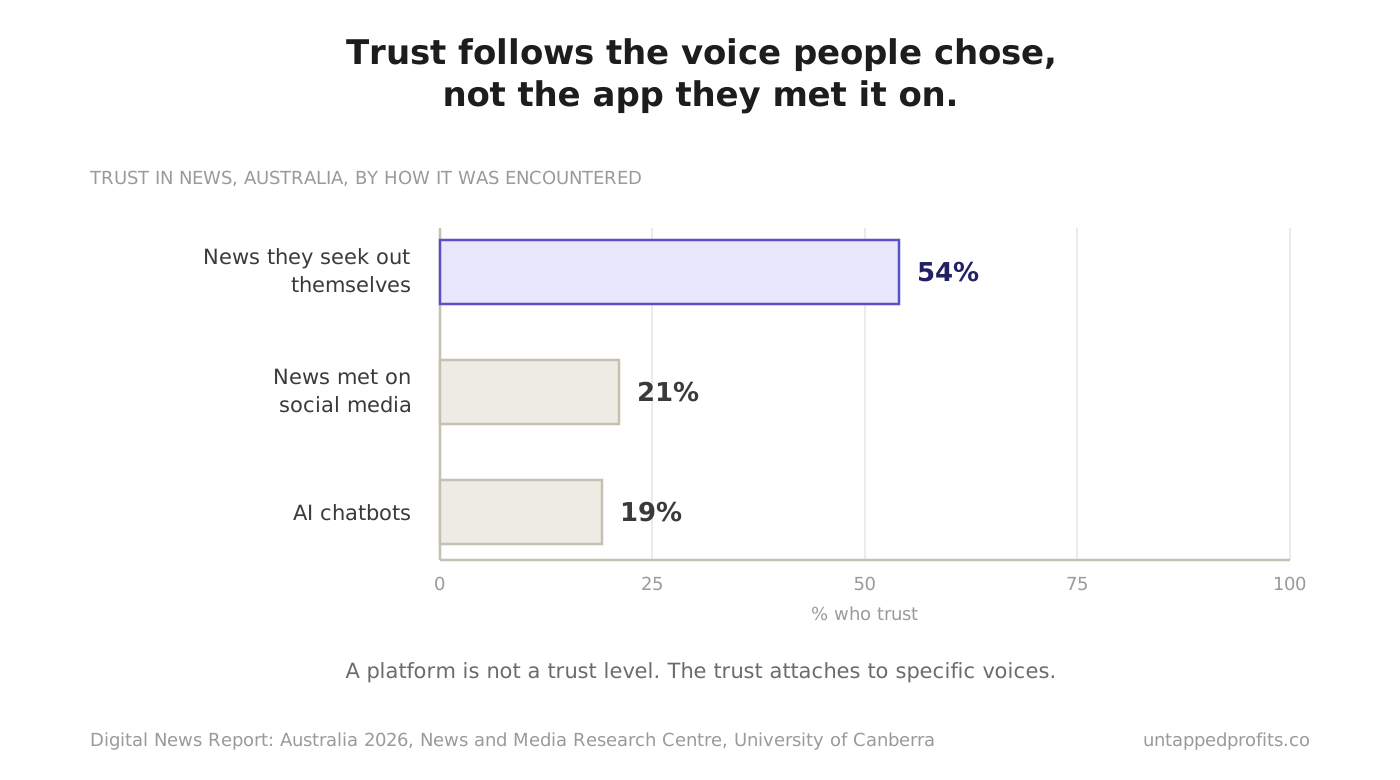
- Trust attaches to chosen voices, not platforms: 54 percent for sources people pick themselves, 21 percent for news met on social media.1
- This runs alongside the intelligence pipeline and replaces none of it. One answers what they want, the other where their attention already lives.
- Public sources only, and never a study of individuals. The output is a synthesis of a market, not a file on a person.
What does this add that standard research does not?
Context. The intelligence pipeline produces wounds, beliefs, objections and the phrases that make someone close a tab. That answers what this person wants and fears. It does not answer where their attention actually lives all day, and that second question is where authentic language, live references and credible framing come from. Both are needed, and this one is usually the one skipped.
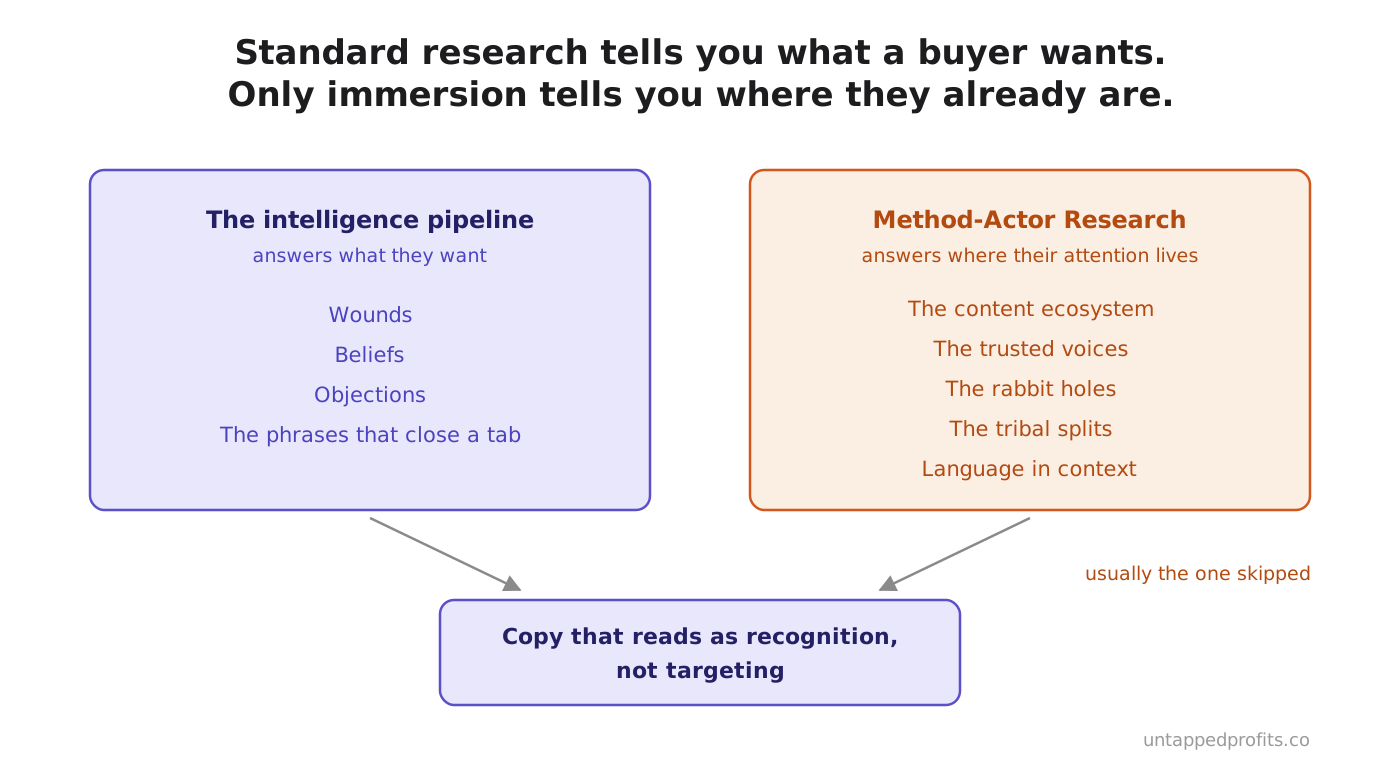
The approach borrows from method acting, which is where the name comes from. Rather than survey an audience from outside it, you inhabit their content ecosystem until their language is yours. Read what they read for a month and you stop guessing at their vocabulary, because you have lived in it.
The practical payoff shows up fastest in objection handling. A buyer who says a price is too high is usually saying they do not believe the outcome. Your Prospect Can Afford It, They Just Don't Believe You makes the full case. You only hear that difference if you have listened to how these people talk to each other rather than how they talk to someone selling.
What are the five maps?
Each one answers a question the standard research leaves open. What they watch, read and listen to about this problem, who they trust and who they have quietly stopped trusting, and what they research obsessively late at night. Which factions exist inside this audience and what divides them. And how they describe the problem to each other when no vendor is in the room.
| Map | The question it settles | What it feeds |
|---|---|---|
| The content ecosystem | Which specific shows, newsletters, groups and accounts, not which platforms | Where the work should appear, and the swipe path |
| The trusted voices | Who they would quote to a peer, and who they have stopped believing | The Proof Bank, and the audience content profile |
| The rabbit holes | What they research obsessively, and the search that follows the first search | Angle generation, as a live source of demand |
| The tribal splits | Which factions exist, which side this buyer is on, what the other side says | Ejection Triggers, with the outsider phrases added |
| Language in context | How they talk to each other rather than to a vendor | Copy, verbatim, pasted and never paraphrased |
The tribal splits map is the one most often left out and the one that costs most. A message written as though an audience is homogeneous reads as written by an outsider, and in a divided audience neutrality is itself a signal. A rabbit hole is worth just as much, because it is a live wound with a search history attached, and it tells you what the market is anxious about this month, not what it told a survey last year.
In practice
Spend a fortnight consuming what they consume before writing anything. Subscribe to the newsletters, join the groups, watch the shows, and take notes on phrasing and not on topics. The output is a page of verbatim language and a short list of accounts, and it will change more of the eventual copy than any brief you could have been handed.
Why can't you just ask them?
Because what an audience says about a channel does not predict what it does with that channel. Australians rate online influencers as a major misinformation threat at a higher rate than any other country measured, and 43 percent of Australian news consumers still get information from creators and influencers. Stated distrust and actual behaviour point in opposite directions, and only one of them is observable.
The trust figures make the same point from another angle. Trust in news encountered on social media sits at 21 percent, against 54 percent for the sources people have chosen for themselves.1 A business that treats a platform as a trust level is measuring the wrong thing, because the trust attaches to specific voices and not to the app they appear in. That is exactly what the trusted-voices map is for.
Media literacy is also not evenly distributed. Professor Sora Park, who leads the Australian research, noted that "only one in four Australians say they have received training" in how to use and understand news.2 How your buyer evaluates a source is a fact about them to be established, not a default carried over from how you evaluate one.
What are the limits on this?
Public sources only, and no study of individuals. This maps a market and never a person, which is both the ethical line and the useful one. A file on one buyer tells you nothing generalisable. Findings are recorded verbatim where they are language and summarised where they are pattern. One client's ecosystem map never informs another client's work, no matter how similar the two businesses look.
That isolation rule does real work. Two roofing companies in different cities have different audiences with different trusted voices and different splits, and importing one map into the other produces work that is almost right, which is worse than obviously generic. The same failure appears whenever context gets stripped out of a decision.
Cadence is straightforward. Run it at onboarding beside the standard research, refresh it at the half-yearly review, and run it again immediately when the audience visibly moves: a new platform, a new dominant voice, or a split that has hardened. Language moves faster than positioning, and the business that names the shift first often wins the category without changing anything. Stop Trying to Be Different is that move, argued in full.
Watch for
Research that becomes surveillance. The line is public and general: what a market reads, argues about and searches for is fair ground, and building a profile of a named individual is not. The test is whether the finding would still be useful if every name were stripped out of it. If it would not, it was never research about the market.
Frequently asked questions
How is this different from building personas?
A persona describes who someone is. This describes where they spend their attention and which voices they already believe. You can have an accurate persona and still write copy that reads as though it came from outside the category, because the persona never contained a single phrase these people actually use.
How long does it take?
A fortnight of genuine immersion at onboarding, then maintenance. The bulk of the value comes from the first pass, because that is when the language lands. After that it is a half-yearly refresh plus whatever the audience does that forces an early one.
What if the audience is split politically?
Then the split is a finding and it gets recorded. Knowing which side your buyer sits on tells you which framings mark you as an outsider, and that goes into the Ejection Triggers. The point is not to take a side. It is to stop accidentally sounding like the other one.
Does this replace talking to customers?
No, and nothing does. Interviews tell you why someone bought. This tells you what surrounds them while they are deciding. A business doing one and not the other has half a picture, and the half it has is usually the one that flatters its existing assumptions.
Where is the output stored?
In that client's Cartridge, with the source kept alongside the synthesis so a claim can be traced back. Language is stored word for word. Patterns are summarised. Nothing crosses between clients.
The bottom line
Most audience research produces an accurate description of a stranger. This produces the ability to write as though you already live there, which is what makes copy read as recognition instead of targeting. Map the ecosystem, the voices, the rabbit holes, the splits and the language, keep it public and keep it general, and the difference shows up in the first draft rather than the fourth.
Where this connects
Method-Actor Research is an addition to Customer Intelligence and runs beside it, not instead of it. The references it surfaces feed The Proof Bank, the outsider phrases it finds sharpen the Ejection Triggers used across Creative Production, and the rabbit holes it exposes become raw material in Content Ideation. Everything it learns is stored in that client's layer of The Memory.
Part 3 · Plan · Chapter 9 of the One Brain Guide
Previous: The Proof Bank ·
Next: The Big Idea ·
All chapters
Sources
- News and Media Research Centre, University of Canberra, Digital News Report: Australia 2026, published June 2026. Key findings as stated by the centre. 43 per cent of Australian news consumers get news from creators and influencers. Audiences trust news they seek out themselves at 54 per cent, against 21 per cent for news met on social media and 19 per cent for AI chatbots. 60 per cent of 18 to 24 year olds have never read a printed newspaper. The report carries comparative data across 48 markets. Publicly funded university research with no commercial interest in the finding.
- News and Media Research Centre, University of Canberra, Digital News Report: Australia 2025, 17 June 2025. Australians rated online influencers and personalities a major misinformation threat at 57 per cent, described in the release as the highest such concern globally, while continuing to use them as a source. That figure concerns influencers as actors and is separate from the report's platform ratings, where TikTok also scores 57 per cent and Facebook 59 per cent. The quotation is Professor Sora Park, lead researcher, on the finding that only a quarter of Australians have had formal news literacy education. The survey was conducted by YouGov in January and February 2025. Figures in both footnotes concern news consumption, and applying them to how a buyer evaluates commercial information is this method's inference.
Every statistic and quotation on this page has been checked against its primary source. Last verified 25 August 2026.
Free guide
Take the method with you. The complete One Brain Method as one PDF: every chapter, the diagrams, and every named framework, ready to hand to whoever runs your marketing. Enter your email and it's yours.
Copy that sounds like recognition beats copy that sounds like targeting.
Book a 30-minute call → See what it takes to have this installed