
Social Strategy is the chapter that decides where a business shows up, how often, and against which objective, before anyone argues about what to post on a Tuesday.
Key takeaways
- Platforms are scored, not chosen by instinct. Five weighted criteria decide the verdict, and the score binds even when it rules a platform out.
- Cadence follows the Operator's real capacity. A plan written to a platform's maximum is a plan written for a different business.
- The typical social media user visits 6.75 platforms a month, so one or two of the larger ones already reach most of an audience.1
- The planning cycle is adopted, not invented. Its six stages are PR Smith's SOSTAC, running from situation reading through to control.
- Everything decided here answers to Distribution, Not Destination. A platform that cannot move readers to the owned property has not earned a place in the mix.
What does a social strategy actually decide?
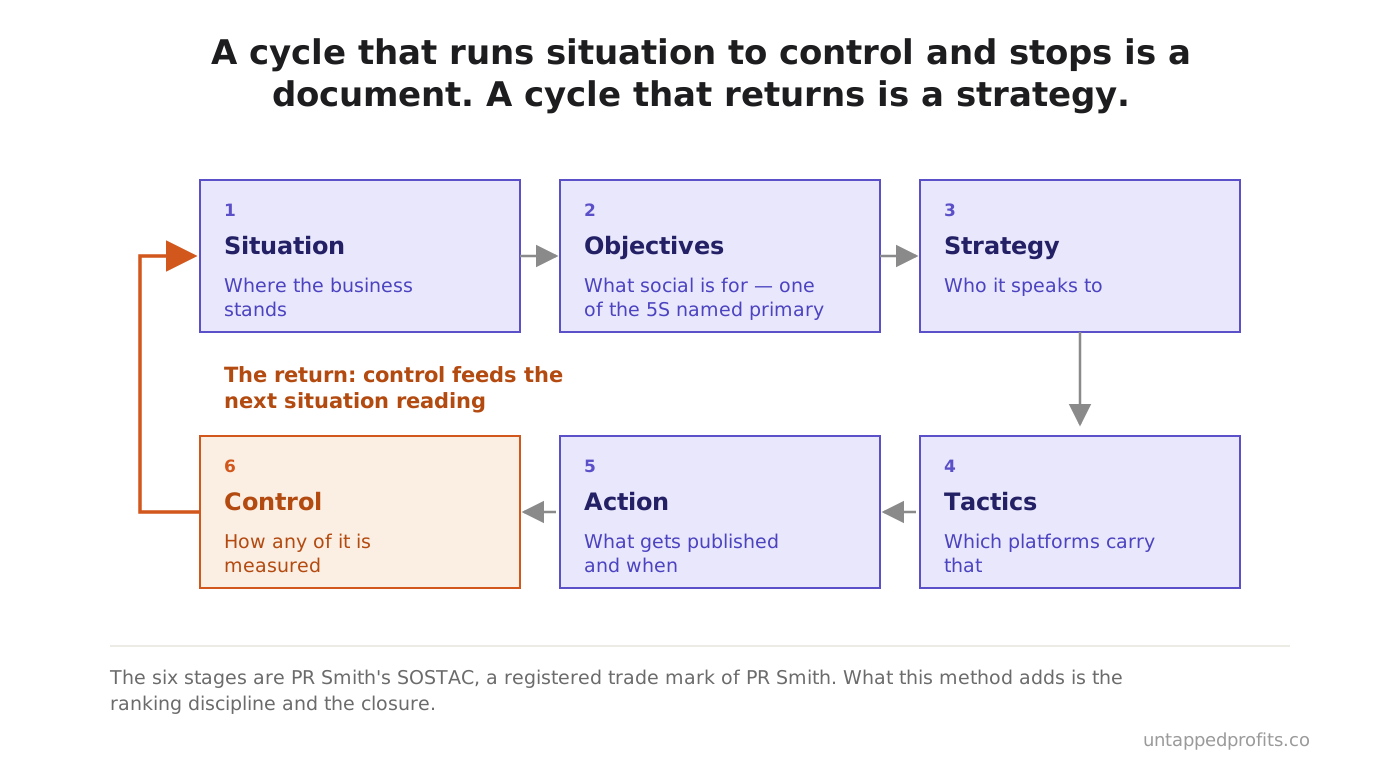
Six things, in order: where the business stands, what social is for, who it speaks to, which platforms carry that, what gets published and when, and how any of it is measured. Those six are PR Smith's SOSTAC, run here as a closed loop, so measurement returns to the situation reading and the next cycle starts from what the last one learned.
Smith is worth naming because the framework is his. "It took me five years to devise SOSTAC", he wrote, and it reads in about five minutes, which is most of the reason it survived 30 years of planning fashions.2 The objectives layer inside it is the 5S, from Smith's later work with Dave Chaffey: sell, serve, speak, save and sizzle.3 Both are adopted here rather than claimed.
What this method adds is the ranking discipline and the closure. One of the 5S is named primary and the rest are secondary, because a social plan chasing all five achieves none of them. And the loop is shut at both ends, which is the same rule that governs The Return Arrow everywhere else in the system. A cycle that runs situation to control and then stops is a document. A cycle that returns is a strategy.
How do you choose which platforms to be on?
By scoring candidates against five weighted criteria and accepting the verdict. Audience alignment carries the most weight, then goal alignment, then whether the platform's native formats suit what the business can actually make, then the resource needed to sustain quality, then competitive white space. The score produces one of four outcomes, and three of them mean the business does not post there.
| Criterion | Weight | The question it settles |
|---|---|---|
| Audience alignment | 30% | Are the people who buy this actually here, in numbers that matter |
| Goal alignment | 25% | Can this platform serve the primary objective, or only a secondary one |
| Format capability fit | 20% | Does what this business can produce well suit what the platform rewards |
| Resource to sustain quality | 15% | Can the cadence be held for a year without the quality dropping |
| Competitive white space | 10% | Is anyone here saying what this business would say |
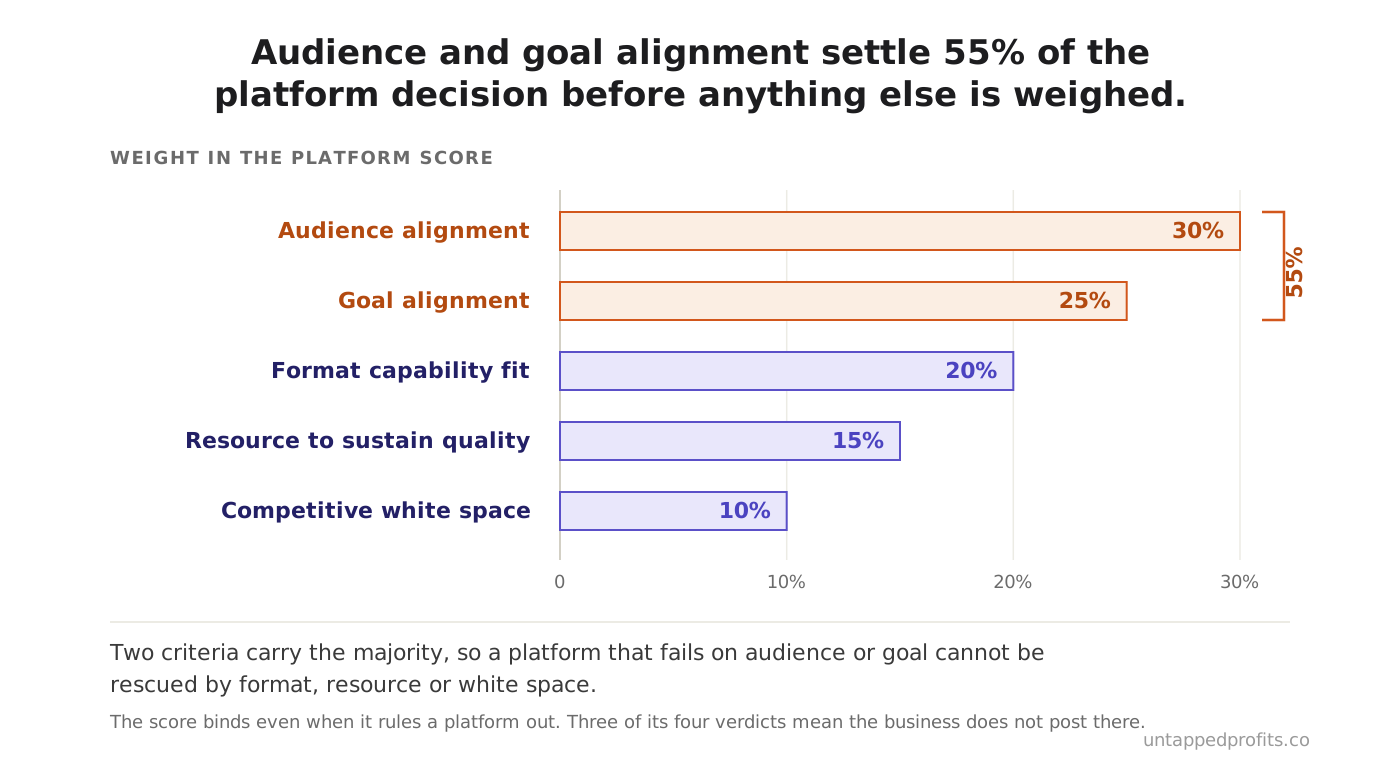
The four verdicts are invest, pilot for 60 days where an audience looks like it is migrating, secure the handle and walk away, or ignore. An Operator-run business enters two at most, run properly. Audience overlap is what makes that defensible. DataReportal's own reading of that overlap is that marketers can reach most of their audience without being present on every platform at once, because the same people turn up on several of them.1
Spreading across five platforms to be safe produces five underfed accounts and a team that resents all of them, the channel-side form of the temperature problem set out in Stop Marketing at 16 Degrees.
In practice
Score the platforms before the first post, and write the losing scores down. The value of a recorded verdict is that it survives the next enthusiasm. When somebody asks in March why the business is not on the platform everyone is talking about, the answer is a line in a file with a date on it, and the question takes 20 seconds instead of a fortnight.
How often should a business publish on social?
At the rate it can hold for a year. Cadence is calibrated to the Operator's actual hours, skills and tools, and it is recorded as a constraint on the calendar instead of a target to beat. Three posts a week held consistently outperforms daily posting abandoned in the second month, because both the ranking systems and the audience reward the pattern more than the volume.
Maturity sets the starting point. A business at the beginning of its maturity curve is given a starting cadence, and the plan says so, because handing a business just getting going the calendar of an established operation is how social strategies die in their first quarter. The maturity reading is taken at onboarding and recorded, so the 90-day expectations are set against where the business actually is.
Objectives get the same treatment. A plan promising reach, engagement, leads and community at once has ranked nothing. Naming one primary objective is what makes the other decisions decidable, and it is also the honest position, because campaigns channel demand that already exists more than they manufacture it — You Cannot Motivate Anyone is that uncomfortable case, made in full.
What keeps social from becoming a separate business?
Shared law and shared numbers. Posts inherit the Proof Bank, so a claim is checked the same way whether it runs in an ad or a caption. Openers answer to the same hook standard. Ejection Triggers run per persona. Organic and paid share one campaign plan and one set of results, and winning ad angles become content themes while winning posts become paid candidates.
That last exchange runs both ways on purpose. An organic post that earns attention on merit is a tested message with real evidence behind it, and putting money behind it is the cheapest paid test available. Nothing gets amplified because a budget line needed spending. The rule is merit only, and it is the same winner-expansion discipline the paid side runs.
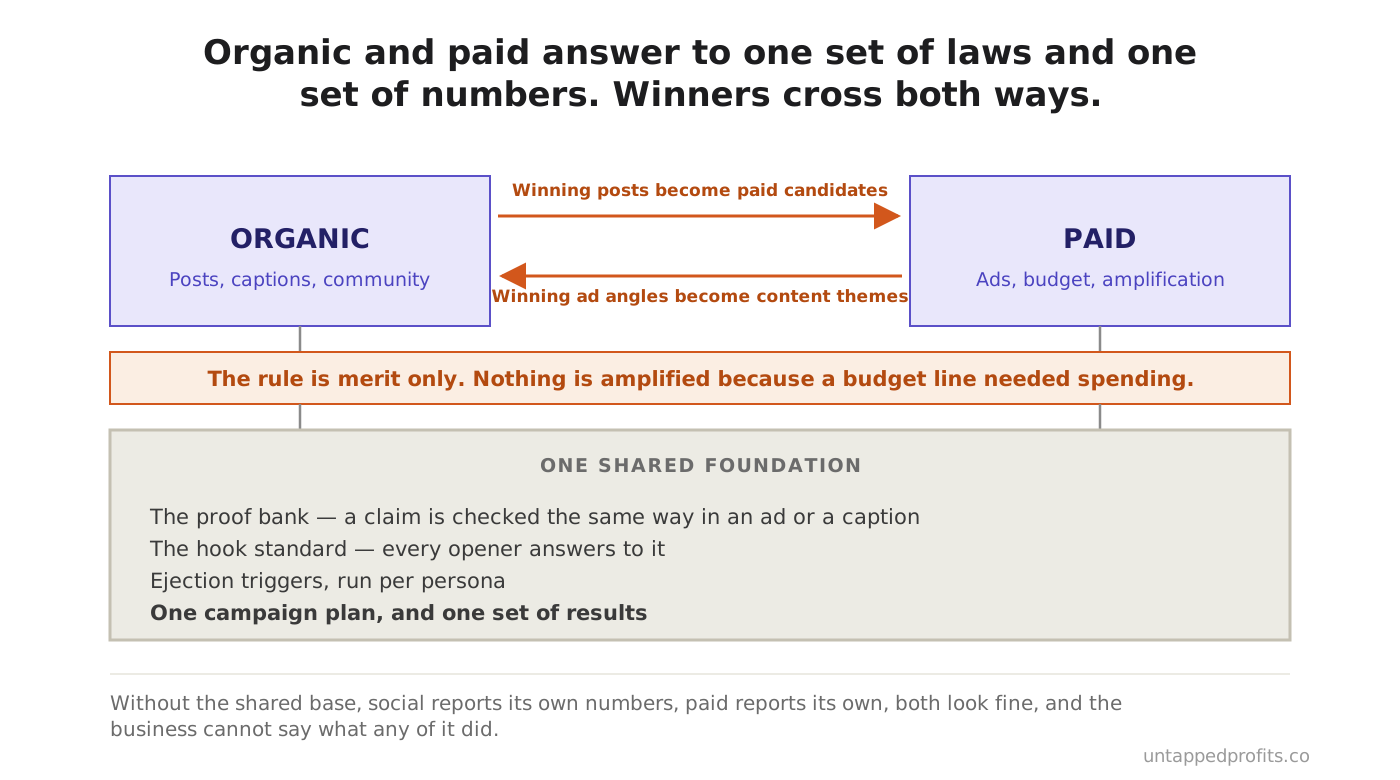
The failure this prevents is the one every multi-provider setup produces. Social reports its own numbers, paid reports its own numbers, both look fine, and the business cannot say what any of it did. Content that bores people is the visible version of the problem and the easier one to fix, which Your Marketing Isn't Wrong, It's Boring covers. The structural version hides for longer.
Watch for
The strategy that was written once and never re-read. The tell is a cadence number nobody has questioned in six months and a platform still in the mix because it was in the mix last year. Reviews are scheduled, not triggered by disappointment. Quarterly light, annual full, and immediately when a platform changes something that breaks an assumption the plan rests on.
Frequently asked questions
Isn't SOSTAC just a generic planning model?
It is a general planning model, which is why it is named here as Smith's rather than dressed up as proprietary. What makes it useful in this system is the two constraints put on it: one objective ranked primary, and the loop closed so control feeds the next situation reading. A framework does not have to be original to be the right tool.
Which platforms should a small business start with?
The two the scoring picks, and the answer differs by business. What does not differ is the count. An Operator running everything for a business does not have the hours to run four accounts at a standard worth reading, and four thin accounts return less than two good ones.
How long before a social strategy shows results?
Longer than paid, and the plan should say so in writing before anyone starts. Organic compounds through consistency, so the first meaningful read is a quarter of held cadence, not a fortnight of posts. Anything promising faster than that is describing paid amplification with an organic label on it.
Where do the platform specifics live?
In a dated file with a re-verification date on its face, checked quarterly. Algorithm behaviour, format priorities and reach bands move every few months, so a chapter that carried them would be wrong within two quarters. The method above survives that. The numbers do not, and they are not written here.
Who decides when the strategy changes?
The Operator, on a ruling, and never a platform's blog post. A material shift gets written up as a proposal with what moved and what it would change, and the plan changes when the ruling is made. Findings Are Not Decisions, and that applies to platform news exactly as it applies to campaign data.
The bottom line
Most social strategies are calendars with an introduction attached. They name the posting frequency and skip the four decisions that make frequency mean anything: what social is for, who it is for, where it earns attention, and where it sends that attention next. Make those four first, score the platforms honestly, set the cadence to the hours that actually exist, and the calendar writes itself out of the decisions rather than standing in for them.
Where this connects
Social Strategy sits under Content & Channel and inherits its operating principle. The objective it ranks and the numbers it answers to come from The Campaign Plan, and the audience it speaks to comes from Customer Intelligence. Openers written for any of these platforms pass The Hook Law like every other hook in the system, and what the strategy learns returns through The Return Arrow. The chapters after this one take the layers below it, starting with how the calendar is actually built.
Part 6 · Content & Channel · Chapter 25 of the One Brain Guide
Previous: Content & Channel ·
Next: Content Architecture ·
All chapters
Sources
- GWI data published by DataReportal, Global Social Media Statistics, figures as at April 2026. The typical social media user visits an average of 6.75 platforms each month and spends about 18 hours 36 minutes a week on social media. The conclusion about platform coverage is DataReportal's own reading of GWI's audience-overlap data, paraphrased here rather than quoted. GWI sells audience research and DataReportal publishes with We Are Social and Meltwater, both of which sell social media services. This is a live tracker page that updates in place, so the as-at date travels with the figure. The figure was verified on 22 August 2026 and should be re-checked periodically.
- PR Smith, Great Answers to Tough Marketing Questions, 2nd edition, Kogan Page, 2003, in the passage reproduced by permission at businessballs.com. SOSTAC is a registered trade mark of PR Smith. Smith has elsewhere described the framework as taking ten years to develop, and the wording quoted here is the 2003 book's.
- PR Smith and Dave Chaffey, Digital Marketing Excellence, published in earlier editions as eMarketing eXcellence, where the 5S objectives framework of sell, serve, speak, save and sizzle is set out.
Every statistic and quotation on this page has been checked against its primary source. Last verified 25 August 2026.
Free guide
Take the method with you. The complete One Brain Method as one PDF: every chapter, the diagrams, and every named framework, ready to hand to whoever runs your marketing. Enter your email and it's yours.
Two platforms run properly will do more for your business than five run thinly.
Book a 30-minute call → See what it takes to have this installed